Rest: why the bag tastes different on day nine
Coffee opened the morning it is roasted tastes flat, gassy and oddly thin. The same bag on day nine tastes like the thing we sold you. Here is what is happening inside the bean, and how long to leave it.
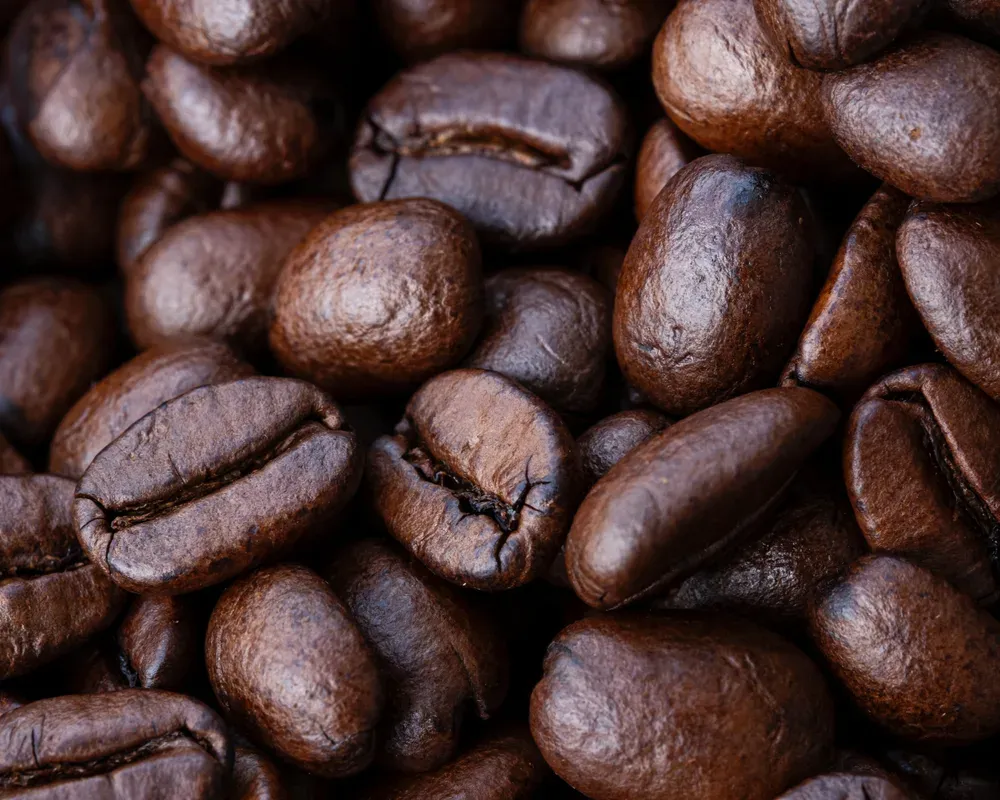
Twice a week someone collects a bag from the roastery an hour after it came off the drum, brews it that evening, and writes to say it tasted of very little. They are not wrong, and it is not the coffee. It is the fizz.
Roasting makes gas, and the gas has to leave
A roast is a chemical argument conducted at two hundred degrees. Sugars brown, acids break down and rebuild, and a large volume of carbon dioxide is created inside a seed with nowhere to put it. Some of it blows out at first crack, when the seed splits and the silverskin lets go. Most of it stays dissolved in the bean matrix and leaks out slowly over the following fortnight — which is the entire reason a coffee bag has a one-way valve in it, and the reason a sealed bag of fresh coffee puffs up on the shelf.
While that gas is still coming out, it gets in the way of everything you are trying to do with water.
Pour water on a two-day-old coffee and the bed lifts, foams and pushes the water away from the grounds. On an espresso machine it is worse: the puck degasses under nine bars of pressure, channels open, and the shot runs fast and tastes hollow no matter how fine you grind. The extraction is not failing because the coffee is bad. It is failing because there is gas where the water wants to be.
Brewing it the day it was roasted
Freshness is not the same as readiness. A bag opened on roast day tastes flat and a little papery, and the natural response is to grind finer and dose heavier — which makes the channelling worse, not better. Six days later the same bag, the same grinder and the same recipe will taste like a different coffee entirely.
Buy whole bean, leave the bag sealed, and start on day three for filter and day seven for espresso. Then keep tasting it. A 250 g bag is roughly twelve filter brews — enough to watch a coffee open up, peak, and start to fade, which is the fastest brewing education there is.
The window is not the same for every lot
How long a coffee needs is set by how far into the roast it went. Dense, lightly roasted, high-grown coffee holds its gas tightly and takes longer to settle: our Kenyan is stubborn for a week and then excellent for a month. A darker lot has a more open, more porous structure — it degasses faster, peaks sooner and goes stale sooner, which is one of the reasons we stop well short of second crack.
When did you last drink the same coffee twice, a week apart, and pay attention to the difference?
Roughly, and from our own bench notes rather than anybody’s laboratory:
- Rung one and two, 202–206 °C. Filter from day three, best from day five to day eighteen, still good at four weeks.
- Rung three, 207–209 °C. Espresso from day seven, and it will hold a recipe for about three weeks before you need to grind coarser.
- Rung four, 210–212 °C. Ready soonest, at about day five, and the first to fade — drink it inside a month.
Freezing works, but only if you do it properly Freeze in daily doses in something genuinely airtight, grind straight from frozen, and never refreeze a bag you have opened and warmed. A bag taken in and out of the freezer collects condensation, and wet coffee stales faster than anything else in your kitchen.
Test it on your own scales
You do not have to take our word for any of this, and we would rather you did not.
How to run it yourself
- Buy one 250 g bag of a single lot and write the roast date on the front of it.
- Brew the same recipe on days 3, 6, 9 and 14 — same dose, same water, same grind setting, same brewer. Change nothing.
- Write one line after each before you drink it. Sharp? Flat? Sweet? Where does it finish?
- Read the four lines together at the end. The shape of the curve will surprise you more than any single cup did.
What we do about it at this end
Nothing here is roasted to stock. Bags leave the day after the batch, so a coffee posted on Friday reaches you at one or two days old and is yours to rest — which is deliberate, because we would rather you had the whole window than the tail end of it. Every bag carries the roast date and the sheet number of the batch it came from, so if something tastes wrong you can tell us which morning to go and look at.
Cafés are on the other side of the same problem: they need coffee that is ready now, not in a week. That is why wholesale deliveries run on fixed days against a roast two days earlier, and why the dial-in visit happens on the account’s own machine rather than ours.
Six things to check first
- How many days off the roast is it?
- Has the bag been open more than two weeks?
- Whole bean, or ground more than a few minutes ago?
- Is the water filtered, and is the kettle actually at temperature?
- Same dose and same yield as last time, weighed rather than guessed?
- Is the grinder due a clean? Old grounds go rancid in the burr chamber.
If all six check out and it still tastes wrong, write to us. That is a real offer, and the sheet is right there on the wall.
Six lots, all with their roast dates on
Every lot on the list says which rung of the ramp it sits on and what it was dropped at — which is most of what you need to know to guess how long to leave it.
- Sheet 414 — Sítio Bela Vista, 6 August — the longest development on our current log, and the fastest to degas.
- Karimikui lot sheet — 203 °C at the drop, and the most stubborn coffee we sell.
- Cerro Azul lot sheet — the espresso lot the day-seven figure above is drawn from.