Development ratio, and why we print it on the bag
The minute and three quarters after first crack decides most of what you taste. Here is the one number we steer by, what it does to the cup at each end of its range, and how to read it off the sheet in your bag.
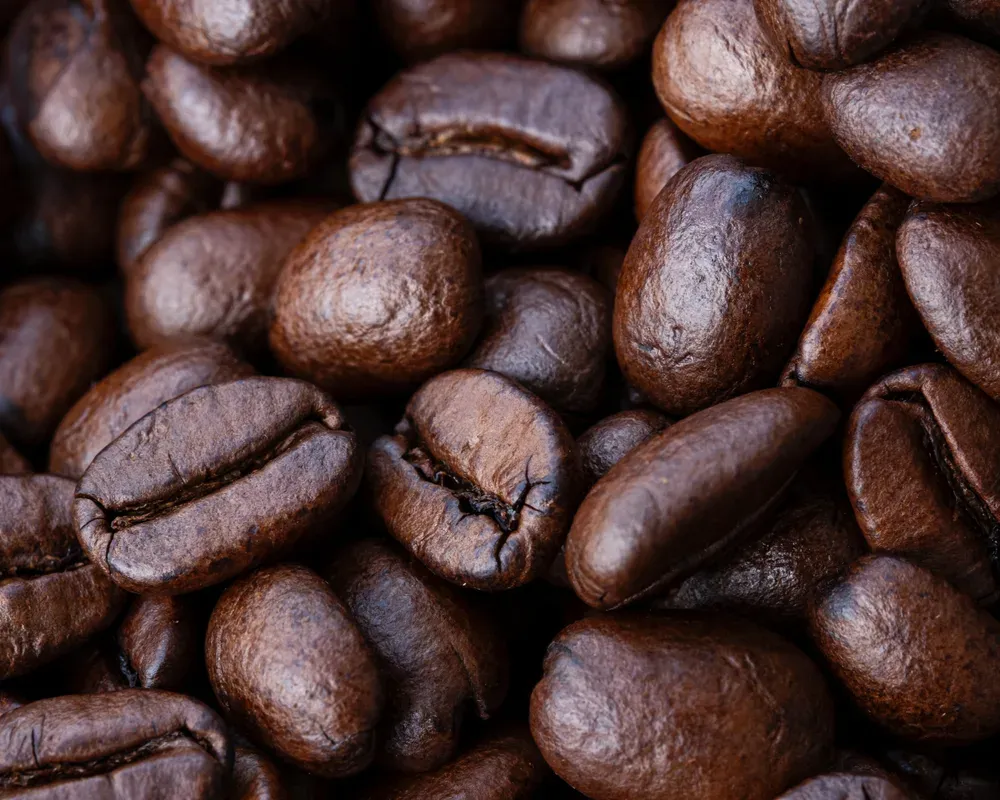
Every bag we post carries a slip with six numbers on it. Five of them are times and temperatures. The sixth is a percentage, and it is the one that actually tells you what is in the bag.
The number
Development ratio is the share of the roast that happens after first crack:
development time ÷ total roast time
Sheet 418 is a good example. Gitwe, twelve kilos, charged at 195 °C, first crack at 8:36, dropped at 10:22. That is 1 minute 46 seconds of development out of 10 minutes 22, so 17.0 %.
Everything before the crack is drying and browning. Nothing about the final colour of the bean is settled yet — you can take two identical roasts to the crack and end up with completely different coffees depending on what you do in the ninety seconds afterwards.
What each end of the range tastes like
Across the six lots on the shelf this week the ratio runs from 15.8 % to 20.6 %, and that narrow-looking band covers most of the useful range.
- Around 15 %. Bright, sometimes sharp. Acidity leads. On a Kenyan that is exactly what you paid for; on a Brazilian it tastes like a mistake, all peanut skin and no body.
- Around 17 %. The middle of our range. Sugars have had time to brown without the fruit flattening out.
- Around 20 %. Sweet, heavier, more chocolate than fruit. Naturals and honeys take it well. Push past it and you start tasting the roast instead of the coffee.
A high development ratio is not the same as a dark roast. You can hold a bean at low heat for a long time after the crack and get something pale and baked — flat, papery, and worse than either end of the range. Time after the crack only helps if the energy is still going in.
How to use the slip
Brew the coffee the way you normally do, then look at the number.
Check the ratio. Under 16 % wants a finer grind, hotter water, or a longer contact time — you are under-extracting a coffee that was already dialled bright.
If it tastes heavy and you wanted brightness, the fix is the same in reverse, and next time order something from the lower end of the shelf. We list the ratio on every lot page for exactly that reason.
Why we bother printing it
Because roast colour is a monotone function of accumulated heat, and development ratio is the honest way to describe where that heat went. A colour chart tells you what the bean looks like. The ratio tells you what it went through.
It is also the number that grades every photograph on this website: each picture is darkened in the file by exactly exp(-1.6 × DTR) of its original luminance, so a plate from a 20.6 % lot is measurably darker than one from a 15.8 % lot. The reference charge — gas off, no crack, ratio zero — ships completely untouched.
Six lots, each with its ratio on the page
From £10.90 a 250 g bag, posted on the next roast day.